Featured Post

WELCOME TO RUSSELL ARBEN FOX'S HOME PAGE

If you're a student looking for syllabi, click the "Academic Home Page" link on your right, and start there.

Wednesday, June 16, 2010

Managerial Expertise, Yes! Vision and Leadership, Not So Much

There were two key passages in President Obama's speech last night, I think; one came near the beginning, the other near the end. First:

You know, for generations, men and women who call this region home have made their living from the water. That living is now in jeopardy. I've talked to shrimpers and fishermen who don't know how they're going to support their families this year. I've seen empty docks and restaurants with fewer customers--even in areas where the beaches are not yet affected. I've talked to owners of shops and hotels who wonder when the tourists will start to come back. The sadness and anger they feel is not just about the money they've lost. It's about a wrenching anxiety that their way of life may be lost. I refuse to let that happen. Tomorrow, I will meet with the chairman of BP and inform him that he is to set aside whatever resources are required to compensate the workers and business owners who have been harmed as a result of his company's recklessness.

Second:

For decades, we have known the days of cheap and easily accessible oil were numbered. For decades, we have talked and talked about the need to end America's century-long addiction to fossil fuels. And for decades, we have failed to act with the sense of urgency that this challenge requires....[T]oday, as we look to the Gulf, we see an entire way of life being threatened by a menacing cloud of black crude. We cannot consign our children to this future. The tragedy unfolding on our coast is the most painful and powerful reminder yet that the time to embrace a clean energy future is now. Now is the moment for this generation to embark on a national mission to unleash American innovation and seize control of our own destiny....Each of us has a part to play in a new future that will benefit all of us. As we recover from this recession, the transition to clean energy has the potential to grow our economy and create millions of good, middle-class jobs--but only if we accelerate that transition....

Now, there are costs associated with this transition. And some believe we can't afford those costs right now. I say we can't afford not to change how we produce and use energy--because the long-term costs to our economy, our national security, and our environment are far greater. So I am happy to look at other ideas and approaches from either party--as long they seriously tackle our addiction to fossil fuels....But the one approach I will not accept is inaction. The one answer I will not settle for is the idea that this challenge is too big and too difficult to meet. You see, the same thing was said about our ability to produce enough planes and tanks in World War II. The same thing was said about our ability to harness the science and technology to land a man safely on the surface of the moon. And yet, time and again, we have refused to settle for the paltry limits of conventional wisdom. Instead, what has defined us as a nation since our founding is our capacity to shape our destiny--our determination to fight for the America we want for our children. Even if we're unsure exactly what that looks like. Even if we don't yet know precisely how to get there. We know we'll get there.


What do I get out of these two passages? From the first, I get compassion, but a fairly narrow compassion, one that elicits a sense of determination more managerial than moral. What is at stake in the Gulf Coast right now, thanks to the unprecedented environmental catastrophe caused by the oil spill? An entire "way of life may be lost." How to conceptualize an enormity like that, address it, and respond to it? Obama chooses to do what, frankly, is the obvious thing to do in our complex, late capitalist world: issue checks. British Petroleum will be required to "set aside whatever resources are required to compensate the workers and business owners who have been harmed as a result of his company's recklessness." That some of the harm felt in the wake of this catastrophe may not be able to be strictly accounted for in terms of declining revenues and property values, that it may have at least as much to do with health and stability and beauty and history...well, unfortunately, BP and the government can't do anything about that. Which means, really, that neither agency can really get a handle on what it means to speak of a "way of life" at all. Ways of life are developed, one must suppose, by ordinary people over the ordinary course of time, something that has to happen completely separate from (though in the midst of) the foremost imperatives of our present economic and legal regimes: totaling up costs, assessing fines, and mailing out the compensation bonuses.

I'm not arguing that such an approach is wrong. On the contrary, while I recognize that the principle of damages and compensations, torts and liabilities can be abused, I'm more or less completely in favor of such, and will remain so as long as we live in the midst of economic and legal regimes which treat the natural environments within which people live and ways of life develop as property that corporations can buy, sell, develop, and abuse, within minimal democratic accountability to the communities their decisions affect. So yes, make BP pay! But at the same time, such an approach is profoundly limited. As my friend Nate Oman points out (though he comes at this from a very different direction than I), relying upon complaints and judgments fails to provide even the stability which private insurance supposedly can, and creates a "feast or famine" mentality which has problems all its own. Most importantly (and here I disagree with Nate's argument), talk compensation for corporate recklessness is, at best, a limited and secondary way to establish norms for civil discourse--by which I mean, the ability of people to talk to one another, learn from and lean upon one another, to take responsibility for and make authoritative decisions regarding the communities and environments (both civil and natural) within which they live. BP still has the power; they still have the deep-water wells; they're still the corporation (or one of them, anyway) which provides the jobs and the infrastructure and the wealth around which so much of life (again, both natural and civil) in the Gulf Coast has developed, and become dependent upon. All you're really doing is forcing the local boss (or bully, or big-time operator; take your pick) to shell out some extra change, to help you, the ones whose way of life was affected, to pick up the pieces (perhaps by picking up and moving on). Consider David Kurtz's thoughts:

The Gulf is not a pristine environment. If your only exposure to the Gulf has been on the beaches of Florida, you might convince yourself that the Gulf is a deep blue aquatic wilderness. But as you travel west, the beaches give way to the marshes of the Mississippi delta, which are crisscrossed by oil and gas pipelines, manmade canals, and flood control levees. Further west, in Texas, the beaches reemerge, but shipping canals, giant refineries, and petrochemical factories persist. Over the horizon, in the Gulf itself, thousands of oil and gas wells pump night and day....

The Deepwater Horizon disaster is as organic a product of human processes in the Gulf as Hurricane Katrina was a product of natural processes. Shipping, flood control, and natural resource extraction have taken a nearly century-long toll on the coast. The Gulf has been abused, exploited, fouled and taken for granted for so long and with such consistency that the shock and horror over this one incident becomes in its own way a salve for our consciences....The spill is...like the ruination an alcoholic leaves in his wake. You can clean up the mess, try to prevent it from happening again, and hope for the best. But as long as he's still drinking, disaster looms.


What would I have liked to hear from the president? Not necessarily more "anger"; anger is a limited rhetorical tool, and besides Obama clearly doesn't do it well. But, for better or worse, leadership in democratic politics (especially in mass polities like our own), is in part theatrical; it involves expressing themes and harnessing attention, so as to build passion and cultivate awareness, to enable citizens and voters to see themselves in an interconnected and responsible light. Moral breadth was called for. But in invoking the "way of life" of the Gulf Coast, and then making it, ultimately, about financial costs which must be paid, Obama made himself more narrowly into a smart, committed insurance actuary, rather than a leader trying to transform the debate.

Which is especially unfortunate, considering that the primary focus of the second (or actually third; talking about the mechanics of the clean-up came first) portion of this speech was exactly the aforementioned ruination which our society's oil addiction wrecks upon our lives. In that portion, he truly needed to holistically express the deeply entwined forces , expectations, worries and consequences which this disaster lays bear, not just for the Gulf Coast, but for the whole nation. But what I got from the second passage isn't much of this; what I got was mostly, again, technical determination and ambition, rather than a broad (encompassing both regrets and hopes) moral concern for what it really means to make wealthy, complicated, post-industrial society like our own capable of re-orienting its energy uses in profound ways. True, the president did talk about the "tragedy" in the Gulf of Mexico, and he did talk about the "costs" of transition. But mostly he was a booster, a calm and serious salesman of possibilities. Green communities, clean-energy jobs, American ingenuity, shaping our own destiny: all the usual highlights of America's famed self-confidence were there, expertly expressed. Ezra Klein and Bradford Plumer are far more conventional liberals than I, and even both of them listened to the president and heard mostly just the classic technical and managerial promises of pragmatic liberal governance: working hand-in-hand with business to make "clean energy profitable"; trusting that, with the right kind of public-private partnerships, "technology can come along and save us". Perhaps that's an unfair reading of Klein and Plumer, not to mention Obama. But the fact remains that, despite his very nice concluding words about the prayers being voiced for shrimping fleets throughout the Gulf region, Obama never demonstrated a conviction that his plans for an oil-spill free and less oil-addicted future might involve chastened rethinking, rather than just ambitious new thoughts.

I'm probably a broken record on this point, but at least I'm not alone. President Jimmy Carter, thirty-one years ago, took the high road, connecting the nation's at-that-time devastating energy crisis--a crisis which was generating profound despair and distrust about the fundamentals of the America's consumer economy, as well as opening a window to real rethinking of those fundamentals--to the need to struggle against a presumption of powerlessness, a presumption that the United States can't really govern itself, because the problems it faced were too complex and its people too selfish. It was a harsh speech, one that has been poorly (and unfairly) treated by history, one that had as it's most crucial element a degree of humility: specifically, a willingness to allow that America was doing some things wrong, and that resolving the crisis would have to involve change, not just going more or the same things in a more closely regulated, better funded, more determined way. If President Obama truly wants to change the debate, to introduce and reframe the many problems which this catastrophe as unveiled for the public at large, than he needed, I think, to show not just a mastery of all the ways in which people of good will and good ideas can come together to make business as usual a safer, fairer, better compensated and more trustworthy endeavor, as valuable as those things assuredly are. He needed to show, also, a recognition that "end[ing] America's century-long addiction to fossil fuels" really might involve altering, even repenting of, the way of life which sustains that addiction. But again, unfortunately, when Obama spoke last night of ways of life, he showed real compassion and devotion to repairing all the different compartments of it...but little vision of how it all comes together, and how the bad is dragged in along with the good. I wasn't looking for him to renounce or complain (Carter didn't either, at least not in his speech itself; I won't pretend to defend how he managed his affairs subsequently); I was hoping that he'd show some leadership in pointing out corrections which must be made, and not just repairs.

Friday, June 11, 2010

Will Political Theory (and Science) "Long Survive"?

Alan Jacobs, after making some pertinent, pointed, and appropriately smart-alecky comments about some recent, rather vague talk about how to "save the humanities" (make them more publicity-minded, more digital, and "bigger," apparently), throws out his own two cents:

I will say one thing about my own discipline: humanities centers or no humanities centers, I do not think that the study of literature will long survive as an independent concern within universities. I think by the time I retire literature will be studied only as part of two other disciplines: rhetoric and cultural history. And while that will be unfortunate in some ways, it won't be the worst thing that ever happened to literature.

Not being a literature person, I don't know how best to think about this prophecy, aside from noting that it would mean the end of jokes about English majors. But it does prompt me to wonder: will my own field--political theory, and even more broadly, political science--long survive? I think so, because I think we're in better shape than literature, when you look at how classes, budgets, requirements, and enrollments are spread across the American academy, from its self-important research one heights to its humble community and liberal arts college depths. But that certainly doesn't mean we'll flourish, at least not in the way graduate schools have been teaching their PhDs to assume the discipline will flourish over the past half-decade or so. Were I to put on Alan's prognosticating hat, and look forward to when I retire (say in 25 years, when I'm my late 60s), I guess I wouldn't be surprised to see, outside of a few select or otherwise well-insulated institutions, political theory essentially absent from political science departments--political philosophy and ethics, done by philosophers, legal scholars, and the occasional political scientist with a cross-appointment, could easily hollow out "political theory" as its own wholly unique subfield. And as for political science itself, I could see it as increasingly conjoined, both conceptually and in terms of actual departments--though probably not by name; I would imagine a lot of shared degree programs here--with either history (possibly to the benefit of Americanists, some comparativists, and what might be considered the more methodologically "conservative" of political theorists) or international studies (perhaps to the benefit of those who do international relations, other sorts of comparative politics, and comparative/non-Western and more "radical" political theory). Constitutional and public law will, I might guess, be sucked away entirely into various pre-law and masters of law programs, and public administration has been moving towards the business schools and the economics departments for a while now. So there you go: political science, circa 2035, might easily mean joint political science/history or political science/international studies departments, with theory courses being rarely taught, with most of that happening over in philosophy (which itself would likely have merged with religion and/or general humanities programs).

Pretty sad? Yes and no; it some ways, the end of political science as its own separate claim to social science thinking might make the study of politics and government a little more interesting to those who care to engage in it. But it any case, I'm just speculating here. Your thoughts, if any?

Friday Morning Videos: "Self-Control"

How many vaguely disquieting, borderline-masochistic, possibly auto-erotic sexual allusions or references can be packed into a single video? Now you know the answer.

Monday, June 07, 2010

Forget the Superbowl...

...and forget its commercials. The 2010 World Cup--which begins in South Africa this Friday--is the occasion for rapacious multinational corporations like Nike to pull out all the stops in order to get nearly a billion people to watch, cheer themselves hoarse, and spend money. And boy, do we ever:


I was obsessive over the World Cup in 2002. Possibly because it took place in South Korea, possibly because to the classic showdown in the final between Germany and Brazil, but mostly, I think, because of this awesome commercial:


Tossing around an oblong brown stitched faux-leather ball in American English just can't visually compete, I guess.

Saturday, June 05, 2010

Oh man.

I was in a melancholy mood, and did what we all do when we feel that way: went searching for clips on Youtube. Man, the things you can find on there...like an early Elvis Costello tv appearance, singing his song the way it was meant to be sung.


Sometimes, you find exactly the clip you need.

Friday, June 04, 2010

Friday Morning Videos: "Goodbye to You"

Everyone remembers their "Warrior" song, but this was the single where Scandal really showed their stuff.

Monday, May 31, 2010

The Greatest English Language Poem Ever? One of the Greatest, Anyway

An old girlfriend of mine, twenty years ago, taught me to love this poem. I'm glad she did.

There was a child went forth every day;
And the first object he look’d upon, that object he became;
And that object became part of him for the day, or a certain part of the day, or for many years, or stretching cycles of years.

The early lilacs became part of this child,
And grass, and white and red morning-glories, and white and red clover, and the song of the phoebe-bird,
And the Third-month lambs, and the sow’s pink-faint litter, and the mare’s foal, and the cow’s calf,
And the noisy brood of the barn-yard, or by the mire of the pond-side,
And the fish suspending themselves so curiously below there—and the beautiful curious liquid,
And the water-plants with their graceful flat heads—all became part of him.

The field-sprouts of Fourth-month and Fifth-month became part of him;
Winter-grain sprouts, and those of the light-yellow corn, and the esculent roots of the garden,
And the apple-trees cover’d with blossoms, and the fruit afterward, and wood-berries, and the commonest weeds by the road;
And the old drunkard staggering home from the out-house of the tavern, whence he had lately risen,
And the school-mistress that pass’d on her way to the school,
And the friendly boys that pass’d—and the quarrelsome boys,
And the tidy and fresh-cheek’d girls—and the barefoot negro boy and girl,
And all the changes of city and country, wherever he went.

His own parents,
He that had father’d him, and she that had conceiv’d him in her womb, and birth’d him,
They gave this child more of themselves than that;
They gave him afterward every day—they became part of him.

The mother at home, quietly placing the dishes on the supper-table;
The mother with mild words—clean her cap and gown, a wholesome odor falling off her person and clothes as she walks by;
The father, strong, self-sufficient, manly, mean, anger’d, unjust;
The blow, the quick loud word, the tight bargain, the crafty lure,
The family usages, the language, the company, the furniture—the yearning and swelling heart,
Affection that will not be gainsay’d—the sense of what is real—the thought if, after all, it should prove unreal,
The doubts of day-time and the doubts of night-time—the curious whether and how,
Whether that which appears so is so, or is it all flashes and specks?
Men and women crowding fast in the streets—if they are not flashes and specks, what are they?
The streets themselves, and the façades of houses, and goods in the windows,
Vehicles, teams, the heavy-plank’d wharves—the huge crossing at the ferries,
The village on the highland, seen from afar at sunset—the river between,
Shadows, aureola and mist, the light falling on roofs and gables of white or brown, three miles off,
The schooner near by, sleepily dropping down the tide—the little boat slack-tow’d astern,
The hurrying tumbling waves, quick-broken crests, slapping,
The strata of color’d clouds, the long bar of maroon-tint, away solitary by itself—the spread of purity it lies motionless in,
The horizon’s edge, the flying sea-crow, the fragrance of salt marsh and shore mud;
These became part of that child who went forth every day, and who now goes, and will always go forth every day.

Thanks for the reminder, Matt. And Walt, wherever you are, happy birthday.

Saturday, May 29, 2010

"What are they gonna say when he's gone!?" (Dennis Hopper, RIP)


I don't know when I first saw this scene, but I know that when I did, it was at a time when I knew next to nothing about movies, and even less about acting. I've learned a little since then...enough, at least, to be able to recognize that film acting is very much its own strange art, one which requires its practitioners to pore themselves--their emotions, their characters, their thoughts--into specific, stylized moments, moments captured in close-ups, lines of dialogue, and brief movements, all so as to give editors and directors the ability to build a story from the splices of film they shoot. On the stage, as a traveling thespian, doing summer stock and memorizing the classics, Hopper probably wouldn't have amounted to much. He wasn't a great actor in that sense. But when he wasn't completely wasted by drugs and alcohol, and when he was in the hands of a smart director (or directing himself), he knew how to take words, how to look while saying them, how to glare as they came out of his mouth...and the result, often, was cinematic gold. Those 30 seconds from Apocalypse Now taught me that, and have stayed with me for decades.


A great performance, in a great film. Rest in peace, Dennis.

Friday, May 28, 2010

Friday Morning Videos: "Panama" and "Right Now" (Special Choose Your Favorite Edition!)

If we're talking loud music from the height of the Friday Night Videos era, Van Halen is, of course, unavoidable. And who would want to avoid them, anyway? The only question, then, is...which Van Halen? The pulsing, bluesy, outrageous, we're-just-doing-this-to-get-laid sound of David Lee Roth?


Or the driving, sharp, ponderous, screaming-at-people-to-pay-attention sound of Sammy Hagar?


They both have their appeal, obviously. But for their hard-core fans, I'm not sure it matters much.

Wednesday, May 26, 2010

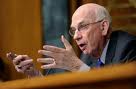
Wrong Lesson, Senator

Soon-to-be-former United States Senator from Utah, Bob Bennett, a three-term Republican senator who lost his party's nomination at the state GOP convention, has some thoughts for the Tea Party activists who beat the drums and brought out the delegates than ended his political career:

Jimmy Carter won the White House in 1976 by riding the wave of anger and disillusionment that followed Gerald Ford's pardon of Richard Nixon. Carter tapped into that anger with the slogan "I will never lie to you."...Four years later, however, he was a political pariah. Voters embraced Ronald Reagan because he wasn't Jimmy Carter, proving that good slogans do not necessarily produce good government. Unlike Carter, Reagan had more than slogans. He came to Washington with a clear plan to revive the economy and overhaul the tax code, revitalize the military, and, most important, boost the national spirit....There's a profound lesson in this for the Tea Party movement.

Bennett compares the Tea Party movement to the same movement which Carter was able to tap into in the wake of the Nixon scandals. Like Carter (or as he presents Carter, anyway), Tea Party activists push their slogans--against government spending, against high unemployment, against a supposedly out-of-touch federal government--with a simplistic moral fervor. And Bennett doubts that such zealous slogans will add up to much when the time for governing comes...in the same way that, in his view, Carter's slogans didn't add up t much either.

[W]hen the new members of Congress whom these slogans elect in November take office, the question becomes: Will they be Carter or Reagan?...As president, Carter was downright depressing. His famous "malaise" speech warned us that America's best days were behind us and suggested that we are a country in irreversible decline. Too many Tea Party speeches sound the same note, even as they invoke Ronald Reagan's name. They are wrong to do so, in my view, because Reagan never lost his optimism and his hope for the future. He was elected because he was good at slogans, but he succeeded as president because he focused on solutions.

I urge all of the Tea Partyers to follow Reagan, not Carter. If they want their movement to be more than a wave that crashes on the beach and then recedes back into the ocean, leaving nothing behind but empty sand, they should stop the "gloom talk." These are not the worst times we have ever faced, nor is the Constitution under serious threat....After all, we survived Jimmy Carter, didn't we?


Ha! Nice last shot there, Senator! I think it completely misses the reality of the historical record, though.

Bennett refers to Carter's famous speech (in which the word "malaise" never appears, by the way); I wonder whether he's ever read it. Yes, it's almost certain too pious, too earnest, to be taken seriously as a piece of presidential rhetoric (though, as I and others have defended the speech before, the fact is it was taken seriously, for a short time at least). However, the larger point is that, even if it was the case (and I would argue that this is a debatable point, but let's assume it for now) that Carter's moralistic approach to leadership was shallow and simplistic, his speech wasn't; on the contrary, the speech reflected a historically sensitive and brave willingness to confront difficult intangibles effecting America's civic culture, and called upon Americans everywhere to confidently shoulder the responsibilities of truly pursuing a common good. He said:

I want to speak to you first tonight about a subject even more serious than energy or inflation. I want to talk to you right now about a fundamental threat to American democracy. I do not mean our political and civil liberties. They will endure. And I do not refer to the outward strength of America, a nation that is at peace tonight everywhere in the world, with unmatched economic power and military might. The threat is nearly invisible in ordinary ways. It is a crisis of confidence....The erosion of our confidence in the future is threatening to destroy the social and the political fabric of America....Confidence in the future has supported everything else--public institutions and private enterprise, our own families, and the very Constitution of the United States. Confidence has defined our course and has served as a link between generations....

Our people are losing that faith, not only in government itself but in the ability as citizens to serve as the ultimate rulers and shapers of our democracy....In a nation that was proud of hard work, strong families, close-knit communities, and our faith in God, too many of us now tend to worship self-indulgence and consumption. Human identity is no longer defined by what one does, but by what one owns. But we've discovered that owning things and consuming things does not satisfy our longing for meaning. We've learned that piling up material goods cannot fill the emptiness of lives which have no confidence or purpose.

The symptoms of this crisis of the American spirit are all around us....[T]here is a growing disrespect for government and for churches and for schools, the news media, and other institutions. This is not a message of happiness or reassurance, but it is the truth and it is a warning....

We know the strength of America. We are strong. We can regain our unity. We can regain our confidence. We are the heirs of generations who survived threats much more powerful and awesome than those that challenge us now. Our fathers and mothers were strong men and women who shaped a new society during the Great Depression, who fought world wars, and who carved out a new charter of peace for the world. We ourselves and the same Americans who just 10 years ago put a man on the Moon. We are the generation that dedicated our society to the pursuit of human rights and equality. And we are the generation that will win the war on the energy problem and in that process rebuild the unity and confidence of America.

We are at a turning point in our history. There are two paths to choose. One is a path I've warned about tonight, the path that leads to fragmentation and self-interest. Down that road lies a mistaken idea of freedom, the right to grasp for ourselves some advantage over others. That path would be one of constant conflict between narrow interests ending in chaos and immobility. It is a certain route to failure. All the traditions of our past, all the lessons of our heritage, all the promises of our future point to another path, the path of common purpose and the restoration of American values. That path leads to true freedom for our Nation and ourselves.


Frankly, I would be delighted if the Tea Party activists did talk like this; it would be wonderful to discover that, in fact, at least some of them really did talk like Carter spoke, rather than the equally simplistic, equally moralistic--even by "conservative" measurements!--slogans that Reagan himself used repeatedly. And perhaps there are many such activists out there. But instead, at least on the basis of those activists making their voices most clearly heard, what we see in the bulk of those involved in Tea Party protests--and those challenging decent, responsible, establishment Republicans like Bennett--is something very far from the earnest lessons of Carter's focused examination of America's character (however poorly he himself executed those lessons). Instead, it is a lesson which teaches the value of a context-free, tantrum-prone, angry confidence in individualism--and therefore, a rejection of the compromises inherent in responsible democratic government. Mark Lilla described this aimless libertarianism as representing "a new political type: the antipolitical Jacobin. The new Jacobins have two classic American traits that have grown much more pronounced in recent decades: blanket distrust of institutions and an astonishing—-and unwarranted—-confidence in the self. They are apocalyptic pessimists about public life and childlike optimists swaddled in self-esteem when it comes to their own powers."

Surely, this isn't the gloom which Bennett (wrongly, I think) attributes to Carter; rather, it's downright...Reaganesque. If nothing else, it wasn't the spirit of Carter's moral seriousness which resulted in Bennett losing his job; it was the spirit of someone who was convinced, unreasonably, that anyone in government must be part of the problem. Bennett, far from encouraging those who come after him to adopt the attitude of his Republican hero, ought to be encouraging them to think twice about the insight of the man he beat.