Featured Post

WELCOME TO RUSSELL ARBEN FOX'S HOME PAGE

If you're a student looking for syllabi, click the "Academic Home Page" link on your right, and start there.

Showing posts with label Left Conservatism. Show all posts

Tuesday, December 30, 2025

Recognizing Christianity’s Universal Leftism for What it Undisputedly Is

[Cross-posted to Religious Socialism]

Phil Christman, a writer and lecturer at the University of Michigan, is a committed Protestant Christian. He grew up attending a fundamentalist Calvinist church, and sharing in that perspective, but it was one that he struggled with from very early on. His disentangling from that approach to Christianity didn’t lead him to renounce his faith; rather, his faith evolved, and with that spiritual evolution came a political one as well. In the excellent Why Christians Should Be Leftists, he testifies to that evolution, and calls other Christians to join him as well.

The fact that Christman’s argument really isn’t one, but rather is a testimony and an altar call of sorts, must be kept in mind when assessing the book. The way he talks about “leftism”—which he refuses to capitalize, stating in an early footnote that he thinks the term describes an “overall direction” and not a destination “where a person can definitively arrive” (p. 16)—is one that flows organically from his Christian commitments. Rather than starting out by defining terms and unfolding a discourse premised on the materialist language that so much of post-Marxist leftism has been defined by over the past two centuries, his reflections are rooted in a grab-bag of deeply religious, even Biblical, concepts and concern that every believing Christian, in one way or another, confronts. What is fallen in this world? What is the nature of work? Should those who accept Jesus as their savior have a politics? Should they have kings? Should believers love their enemies? And just who, exactly, are their neighbors, and how should they interact with them? In Christman’s view, a serious engagement with all these questions and more must inevitably point believers towards some kind of socialism—but this is a conclusion which he articulates in a manner that, while deeply informed by political argument, actually doesn’t flow from the arguments which have shaped socialism over the years.

This, I think, is why a socialist review of Christman’s book may be valuable. Why Christians Should Be Leftists hasn’t become a bestselling, culture-defining book in the months since its publication (unfortunately), but it has been fairly widely reviewed…overwhelmingly by other thoughtful writers—peers of Christman’s, really—who share his Christian commitments. Kayak Oakes praised it in National Catholic Reporter, as did James K.A. Smith in The Christian Century and Samuel McCann in The Presbyterian Outlook (the more conservative publications First Things, Christianity Today, and Front Porch Republic were, perhaps predictably. less receptive to his book, though all acknowledged the power of his anti-capitalist claims). All of the above comments are worth perusing (as are thoughtful engagements with Christman by such writers as Alan Jacobs), and so are Christman’s own occasional responses to such. But none of any of the above, to my knowledge, have approached the book from the perspective of the Left (using a capital letter this time) as it has emerged over the course of the rise of global capitalism, the impacts of the industrial revolution, and the both important achievements and catastrophic failures attached to the Left throughout Western modernity. I’m hardly an expert on all of the above, but as a card-carrying, dues-paying member of the Democratic Socialists of America, as well as believing Christian (though a Mormon one, which I suspect at least a couple of the above might insist may not really count), let me give it a try.

Christman’s turn towards leftism, and his turn away from the conservative Christianity that defined his early life, defines the whole arc of his book, and is noted by every reviewer of it. As a college student attending a Calvinist university, he recounts being a lonely, confused, frustrated individual—feeling like a profound loser, in his own terms. And then recounts a time when he was reading from the Bible as part of group of similar losers outdoors—at least as compared to the other students playing the guitar, smoking, or flirting in their own groups all around them—and as they worked through Jesus’s Sermon on the Mount from the Book of Matthew in the New Testament, he suddenly thought about everyone around him differently:

I suddenly saw the glory of God shining out of their faces….[E]ach of these people was a subject that a person could love, and was capable of giving love to others, and was therefore infinitely precious and infinitely interesting. That whole economy of losers and winners, with its implied scarcity of worthiness, had disappeared. Or not disappeared but receded: it didn’t seem inevitable or fully real anymore. It seemed like a lie that needed to be undone by the constant practice of universal, constant, and unvarying love

From this point on, step by step, the idea that the Christian message of God’s grace, forgiveness, and love entails an absolute, universal equality of persons comes to be unfolded in Christman’s life and thought. “Part of the point of being a Christian,” he writes, “is that you’re supposed to unlearn the human instinct to circle the wagons, identify the outsiders, prioritize the in-group,” and instead develop “the deep conviction that every stranger, every enemy, is a neighbor” (pp. 30-31). Since the structure of capitalism depends upon the private or corporate accumulation of profit and property—and thus functionally meaning the exclusion of others from possession of such of wealth—that means Christians have to move beyond it, even the more liberal and egalitarian versions of it. Similarly, since the structure of national borders depends upon the territorial claims to sovereignty—and thus functionally meaning the exclusion of others from the systems of law and care that sovereign governments establish—that means that Christians have to move beyond the state's imposition of them, even when done so in light of comparatively democratic and humanitarian priorities. The universalizing, the absolute neighboring, of the resources of the world and the people who live within it, is the socialism that Christman believes the plain teachings of Jesus require. (And for those who insist that such "socialism" needs to take the form of personal charity rather than government policy, Christman's succinct reproofs--so why haven't believing Christians ever actually created charitable systems sufficient to meet Jesus's call? and why wouldn't such charity create the same "dependency" which conservatives supposedly fear?--are as solid as any I've ever read.)

Obviously, Karl Marx would have all sorts of problems with this. Not the final result--Marx's vision of post-socialist revolution communism included the "withering away of the state" and, thus, presumably the realization of some kind of universal community of freedom and recognition, after all. Rather, Marx's contempt would have been for Christman's locating of the roots of this ideal in moral conviction, rather than some kind of material logic. His famous description of Christian socialism--“the holy water with which the priest consecrates the heart-burnings of the aristocrat”--makes his perspective fairly clear: if socialism is understood as something that emerges from the guilty feelings or inspired insights of religious believers, rather than something that is built historically, structurally—that is, scientifically—then it'll never truly be a liberating and empowering social form: it'll just be another con that the upper classes impose upon everyone else (and perhaps actually delude themselves into believing). Marx's perspective is certainly at least partly responsible for the hostility to religion widely associated with the Left over the centuries.

But as anyone who spends any time amongst actual Leftists can tell you, this is a perspective that 1) was obviously wrong from the beginning, and has remained so over the years, and 2) has been basically ignored by tens of millions of Leftist religious believers over the same period of time, Christians most certainly included. In regards to point 1), the vital revolutionary force which Marx’s analysis of the history of capitalism provided, whatever its usefulness and insight insofar as understanding the alienation experienced under industrialization is concerned, has been questioned, denounced, re-interpreted, and re-affirmed in alternative ways that have given shape to every socialist argument since the mid-19th century on. To resolutely demand fidelity to Marx's presumed linkage between the opposition to capitalism and the opposition to religious faith in the face of all this thoughtful debate is to do as much damage to the heritage of that ideal as is done by non-Leftists who insist that “socialism” can only ever mean the tyranny of Stalin or Mao. And in regards to point 2), the fact that Christian socialists—the Methodists who helped form the British Labor Party, the Catholics who organized the Catholic Worker Movement, and hundreds of other example—have, sometimes out of necessity and sometimes out of genuine intellectual agreement, appropriated and articulated their views in manners borrowed from Marx (talking about “class struggle,” for example), hardly means that their socialism is therefore Marxist, and necessarily carries all of his materialist, historicist, anti-religious baggage. This is especially the case for believers in the words of Jesus as presented in the New Testament, since of course those words were inspiring believers to—as recounted in the Book of Acts, chapter 4—sell their goods, distribute them equally, and have all things in common, right from the beginning. When it comes to socialism, Marx was a late addition to the tradition, and as important (for both good and ill) his contributions were, the Left has no more need to be beholden to him than it does to be beholden to Leo Tolstoy, Eduard Bernstein, Eugene Debs, Keir Hardie, Beatrice Webb, Dorothy Day, Simone Weil, or Gustavo Díaz.

Christman, for his part, elides most of this history by providing an assessment of where he sees different leftist intellectual trajectories pointing that is, in his view, “pretty vibes-based,” treating Marx’s thought “as we’d treat a buffet: you pick the stuff you think is helpful and ignore the rest, the same as you would any other economist or political theorist” (pp. 144-145). For people whose approach to these matters is grounded in historical and theoretical arguments over ideology and the writings of particular individuals, this is a pretty frustrating approach. Partly because it gets stuff wrong—as Christman does, such as when, earlier in the book, he goes too far in condemning the liberalism of John Locke as incapable of responding to the threats of capitalism, forgetting that Locke himself wrote that the rights of the property-owner oblige them to make sure that “enough, and as good” will always be available to everyone else—and partly because these are, by necessity, political debates that we are having, and as such being guided by one’s revelatory experience with the Sermon on the Mount leaves much unsaid.

But that doesn’t mean, and shouldn’t mean, that defenses of socialism like Christman’s need to be considered wrong; they aren’t. They just aren’t complete—as I think Christman himself would be quick to acknowledge. Again, his book isn’t really an argument for why Christians should be on the Left; it is a testimony of why, and how, the Christian message made it clear to him how he should think about inequality, about capitalism, about war, about borders, about wealth, and thus found himself moving leftward, hand-in-hand with his faith. He very thoughtfully considers all sorts of Left arrangements which the socialist tradition has inspired reformers and revolutionaries alike to consider over the centuries—worker co-ops, redistribution via taxation, government ownership of industries, wealth funds, and more—and acknowledges that there is plenty of thinking and working yet to be done in pursuing these Christian ends (“I don’t think it pays to get too dug in at this point on any of those systems,” he comments ruefully—p. 121). But that just means that Christman, like any other religious believer whose eyes have been opened to the socialist imperative, is in the same condition as the rest of us: making our way towards more justice, more fairness, more beloved communities in our world, and being attended by God's grace and forgiveness in the midst of our own unavoidable involvement in all that challenges those aspirations along the way.

It should be noted that many of the Christian reviewers of Why Christians Should Be Leftists do, in fact, recognize that any proper understand of Christianity imposes a universalist vision of neighborliness and love upon believers, and they consequently recognize that there is truth to Christian condemnations of how even liberal democratic states (and their richest citizens and corporations) police their borders and protect their wealth, even if they demure from recognizing that such condemnations put them on the Left. But what about personal sin, they ask? What about moral purity? The records we have of Jesus’s words suggest that he didn’t talk about sexual morality nearly as much as he talked about sharing your goods with your neighbor, and didn’t condemn personal lifestyles nearly as much as he condemned exploiting the poor—but to insist that he never talked about the former isn’t correct either. So yes, those who want to find reasons to doubt the sincerity of Christman’s Christian faith solely on the basis of what he thinks about abortion or homosexuality or any other culture war issue can certainly do so. And when I put on my political scientist hat, I can explain at length how predictable it is that Christman, as he moved away from the Calvinist socialization of his youth, likely came to follow well-established patterns of liberal thought which granted enough importance to individualist expressions of moral choice such that he simply couldn’t take the sexual traditionalism of much of American Christianity seriously. But frankly, as something of a left conservative myself, I am happy that Christman felt no need to warp his testimony so as to encompass and defend those elements of his current political beliefs that actually have nothing to do what’s going on at their heart.

Their heart is, simply, a pious conviction that political, much less pragmatic, disputes about what can or should be done when it comes to applying the Sermon on the Mount, to applying a complete abandonment of any kind of distinction between winners and losers, are secondary. Towards the end of the book, Christman writes (in a vein very reminiscent of the theologian Stanley Hauerwas, though he never mentions his name):

The machinery of history is not ours to operate even if we could, which we can’t. But that’s OK, because there isn’t any machinery anyway. There’s the kingdom of God, which God is bringing about and will bring about. We live in a way that anticipates it. We forgive debtors, we hasten to resolve conflicts, we try to love our enemies. We try to build a society where the meek, the peacemaker, the person on the bottom of things is abundantly blessed. Leftism at its best helps us to do that. We are leftists only insofar as it is a name for our doing that (pp. 153-154).

Christman’s final words of testimony are, appropriately, “Even so, come quickly, Lord Jesus” (p. 174). Both the unreconstructed Marxist, and the MAGA-influenced Christian conservative who refuses to accept Jesus’s call for those who follow him to have complete solidarity with the poor, with their enemies, and with everyone else, would likely sniff at such a conclusion. But this Christian socialist loved it, and the book itself as well. To Mr. Christman, I can only say, as our mutually acknowledged lord and savior is reported to have said, "Well done, good and faithful servant." (And to everyone else, myself included, I can only also add: “Go and do likewise.”)

Friday, April 19, 2024

On George Scialabba and the Left Conservative Possibility

[A version of this piece is cross-posted to Current]

How might one politically categorize the following statement?

[M]y apparently disparate-sounding worries....all result from one or another move on the part of the culture away from the immediate, the instinctual, the face-to-face. We are embodied beings, gradually adapted over millions of year to thrive on a certain scale, our metabolisms a delicate orchestration of innumerable biological and geophysical rhythms. The culture of modernity has thrust upon us, sometimes with traumatic abruptness, experiences, relationships, and powers for which we may not yet be ready–to which we may need more time to adapt....If we cannot slow down and grow cautiously, evenly, gradually into our new technological and political possibilities and responsibilities–even the potentially liberating ones–the last recognizably individual men and women may give place, before too many generations, to the simultaneously sub- and super-human civilization of the hive. 

For those whose exposure to or engagement with political ideas is fairly minimal–whether by choice or by circumstance or both–the question would likely seem strange. After all, there are no obvious partisan markers anywhere in this statement, no references to presidential candidates or global events or policy disputes. So what is political about it? But for those who have some familiarity with the history of political ideas and arguments, as well as some of their attendant philosophical formulations and literary tropes, there are flags in this statement which suggest an answer–and that answer, in all likelihood, would be “conservative.”

Not “conservative” in the way most Americans would be likely to use the term today, to be sure. The passage doesn’t provide anything that connects to Donald Trump or lower taxes or tighter immigration or anti-LGBTQ positions or the Supreme Court, at least not directly. But astute readers would pick up on the final sentence’s reference to Friedrich Nietzsche’s “last man,” his vision of a humanity that has succumbed to nihilism, hedonism, and passivity, and thus falls into a kind of groupthink where all individual accomplishments are lost. The passage also speaks warningly about developments and innovations of modernity which humanity, whose embodiment reflects a deep evolutionary grounding in small-scale interactions, needs to be far more cautious about embracing. Hence, the politics of this passage could be–and, I think, would be, if read without any additional context–plausibly coded as small-c conservative, or at least as philosophically anti-progressive. Its implications include a preference for the local, a suspicion of intellectual abstractions, a discontent with the ennui that consumer wealth and technological ease has enabled, and a fear of a too-rapidly pursued future whose liberating possibilities will likely be lost unless they are approached incrementally (if at all). In short, it communicates a respect for, even a valuation of, a more limited conceptualization of our social world–and, aside from certain strains of environmental concern within the current constellation of liberal thought, talk of “limits” is generally seen as the provenance of conservatives, not progressives.

 And yet, the author of this passage is George Scialabba, a man of–as was once not infrequently said of writers like him–“the left.” Scialabba is a highly regarded essayist, book review, and public intellectual, whose latest collection, Only a Voice: Essays (Verso, 2023), is a brilliant collection of insightful readings and contrarian arguments about some of the most important thinkers and writers of the past century, and some from centuries earlier: Adam Smith, Thomas Paine, T.S. Eliot, Leo Strauss, Irving Howe, I.F. Stone, and many more. The essay “Last Men and Women,” a survey of criticisms of mass society and modern democracy, includes the passage quoted at the beginning of this essay, but also this plain self-description: “[This]...is where I also stand–with the Enlightenment and its contemporary heirs, and against Straussians, religious conservatives, national greatness neoconservatives, Ayn Randian libertarians, and anyone else for whom tolerance, civic equality, international law, and a universal minimum standard of material welfare are less than fundamental commitments.” Whatever else might be said about that self-description (which was published in 2021), it doesn’t sound at all “conservative,” even in the small-c sense. So should we conclude therefore that Scialabba is simply inconsistent? Or might there be a political categorization which can, in a theoretically consistent way, capture both his progressive Enlightenment aspirations, and well as his worries about the same?

I think there is–though, as with all ideological labels, it’s a categorization with greater use as a conversational reference than as an analytical tool. The label is “left conservatism,” and applying it to Scialabba’s writings–or, perhaps more accurately, using Scilabba’s writings to apply the label more broadly–is an intellectual exercise worth engaging in, especially in our moment when so many other political categorizations seem either overthrown or irrelevant or both.

 The term “left conservative” is hardly new; it’s been coined and re-coined multiple times over the decades. Most recently, the term been revived in some conservative publications to describe a mix of anti-globalist, socially conservative, pro-labor, subsidiarian perspectives which recognize the need for protectionist action to strengthen national economies and local cultures. Those considerations are accurate, so far as they go. But to really dig into the idea–and to assess its fit with Scialabba’s incisive considerations of our moment–we need to look to an earlier expression of it, one found in the third-person self-description Norman Mailer provided in his book Armies of the Night: “Mailer was a Left Conservative. So he had his own point of view. To himself he would suggest that he tried to think in the style of Marx in order to attain certain values suggested by Edmund Burke.” What is it that Mailer was describing there, this Marxian-style attainment of Burkean principles? By “the style of Marx” one must presumably mean employing a revolutionary, or at least structural, set of intellectual tools, ones addressed to emancipation of persons and goods in society; by “values suggested by Edmund Burke,” one must presumably be talking about local communities and the traditions they give life to, and the need to maintain and strengthen them. So how to put that together?

The most intellectual plausible articulation of this idea, I think, is to say that modernity–whether that is dated to the Protestant Reformation, the Declaration of Independence, the Industrial Revolution, or any other particular historical landmark or era–is simply different from what came before it. The 18th-century (and earlier) traditions and communities which Burke defended cannot exercise the authority they once did in a world in which individual subjectivity has conditioned our very understanding of the self. Technology, social fluidity, capitalism, democracy: all are genies let out of the bottle, in the face of which traditions of all kinds suffer. (Marx’s famous statement in The Communist Manifesto that, with industrialization, “all-fixed, fast-frozen relations, with their train of ancient and venerable prejudices and opinions are swept away....all that is solid melts into air, all that is holy is profaned,” is an obvious support to this formulation, but Scialabba himself adds one as well, describing Burke’s own writings as “expressions of outraged common sense” in the face of the inevitable—and, he asserts, entirely justified—transformations that came with the expansion of suffrage and other “democratic truths”). Hence, the preservation of Burkean values–acting “conservatively,” in other words--now requires actions which go beyond the expansion of liberal guarantees or the amelioration of socio-economic disruptions.

This reading of Mailer may simply sound like the conservative insight famously expressed by G.K. Chesterton in his book Orthodoxy: “If you leave a white post alone it will soon be a black post. If you particularly want it to be white you must be always painting it again; that is, you must be always having a revolution.” But the “revolution” invoked by Chesterton in the name of conserving a particular state of affairs was a formal, not structural one, whereas the better understanding of Mailer’s point about “think[ing] in the style of Marx,” I believe, means something truly “left”in the structural, even radical, sense. Maybe, the left conservative thinks, only a radical shift towards the democratization, the socialization, and the equalization of the products and processes of modernity will be sufficient to enable people to continue to thrive in their communities.

And it really is communities which are central here. (One could argue that “left conservatism” might better be expressed as “left communitarianism,” and there’s some value to putting it that way. But since the connections and commonalities which emerge in the context of communities are, I think, something that human beings, as political animals, always seek to construct and always mourn the absence of–and here I am heavily influenced by the writings of Michael Walzer and Charles Taylor, two political philosophers that were frequently labeled “communitarians” when that term enjoyed a boomlet 30 years ago–focusing on the concern to literally conserve that which is genuinely valuable about our communities is appropriate.) Our individualistic age puts an asterisk of suspicion beside all communities, however defined, seeing them all as potential sources of majoritarian abuse or undemocratic tyranny–which, of course, they too often are; as Christians at least ought to be quick to acknowledge, we are fallen beings, after all. But the conservative desire for belonging and rootedness and community, whatever evils it enables, also grounds both democratic and egalitarian possibilities: traditions are forms of meaning and fulfillment which cannot (or at least cannot easily) be turned into abstractions and thus be taxed away from you or turned against you by those who wield power. To the extent that the modern world sees profits, procreation, wars, borders, religions, holidays, families, markets, marriages, and more as institutions and events best understood, conducted, and transformed in light of some abstract principle--whether that be individual rights or personal conscience or democratic harmony or economic progress--one could argue, if one is of this particular conservative orientation (as I think Scialabba is, at least partly), that something in the modern world has gone wrong, or at least has gotten too far away from the instinctual truths and embedded necessities of human existence, truths and necessities which are the necessary (if not sufficient) prerequisites to treating all people as equally capable of self-rule and equally deserving of respect. That’s not necessarily a defense of all communities, especially not national ones, which too regularly employ the coercive power of the state to maintain the definition and borders which those in power decide upon; Mailer’s communitarianism, a term he probably would have blanched at, was decidedly small-scale and anarchic. But the centrality of being in connection with others, and defending those connections, remains.

Not many have picked up on this reading of Mailer’s ideas in the two generations since, to say the least. On the left or progressive liberal side of America’s intellectual divide, as it began to deepen and sharpen in the decades following the upheavals of the 1960s, leftism mostly focused its decreasing energies on various statist parties and platforms, while most liberals came to treat those who worried about the excesses of their individualistic liberatory language as either 1) accidental intellectual traitors (as it was frequently expressed at a UC-Santa Cruz conference on the “specter of  left conservatism” in 1998, these unfortunate folk are genuine leftists whose distaste for the latest theoretical developments has tricked them into allying with conservative forces), or 2) just remnants of an old rural conservative Democrat faction, soon to die out. That’s assuming White voters were the ones being discussed, of course; the religiousity and social conservatism of many Black voters was treated very differently, though not until Bill Clinton was its preferred language given much credence, and even that didn’t last–Barak Obama, our first Black president, reflected very little of that sensibility while in the White House (which, cynically speaking, is perhaps one of the reasons he was able to attain it.)

As for America’s rightward flank, the rise of a pro-business, anti-socialist libertarianism as a component of the Republican coalition from the 1960s through the 1990s made any kind of liberal egalitarianism, much less leftism, unwelcome there. Occasionally you see attempts to import into American conservative discourse “Red Tory” formulations more common to Western European conservatism generally, but despite gestures in that direction (George W. Bush’s “compassionate conservatism,” for example), none of them have in any significant way shaped the overall conservative coalition in the U.S. Of course, some would insist upon adding a “until the rise of Donald Trump in 2016” to that sentence, and it is true that Trump’s profound lack of ideological (much less ethical) grounding has arguably presented an opening for leftist ideas to experience a revival in Republican circles. But while in today’s America you are, in fact, more likely to hear talk of structural or revolutionary changes to our liberal capitalist and democratic order coming from the Trumpist corner of the Republican party than from the Democrats led by Joe Biden, that talk is generally, and tragically, reflective of a fascist-adjacent authoritarianism which too many social conservatives, following Trump, seem to have become comfortable with. Even thoughtful and nominally worker-friendly treatments of the integralist argument in favor of more firmly supporting traditional community-based values seem to presume egalitarianism itself to be the real problem, and what limited appreciation for the solidarist approach to building economic equality–meaning unions, mainly–which still exists in America today is found coming the Democrats and the White House, not Mar-a-Lago.

All of which means that the left conservative position lacks a broad constituency in American politics. But that does not mean it lacks a voice. Perhaps most influentially, the historian Christopher Lasch, long a hero to many dissident and contrary conservatives (even as he remained personally a committed Democratic voter and a firm-if-worried supporter of the liberal egalitarian project overall through his life), and someone who himself never used terms like “left conservative” or “communitarian” in a self-descriptive way (even as close students of Lasch work subsequently used both), articulated at least the outlines of what could be called a left conservative ideology as well as anyone. And Scialabba presents, in multiple essays, Lasch as perhaps the most valuable of all the “antiprogressives” (which is not the same as “conservatives”) whom he holds that fans of the Enlightenment, like himself, must learn from.

That learning, he writes, involves grappling with the best thinkers’ “combination of discrimination and democratic passion,” defining the latter as “the constant remembrance that democracy entails not merely that the people should be governed well but also that the people should govern.” Mourning the tendency of intellectuals and politicians of all stripes–including both what he calls “the business party” and “the Progressives”–to ignore this fundamental principle, Scialabba’s cast of heroes includes, as he lays them out in his introduction to Only a Voice, scholars and activists and writers who, in one way or another, demonstrate a “moral intelligence” that “allowed them to make relevant distinctions and get the difficult decisions right.” This means, rather than simple apologists for the Enlightenment, such figures as Randolph Bourne, George Orwell, Irving Howe, Barbara Ehrenreich, Noam Chomsky, Ralph Nader, Richard Rorty, Bill McKibben, along with Lasch, earn his praise. These are people who, in his view, take seriously their “democratic obligation to persuade people before legislating for them”–and that means taking seriously the “anxieties about modernity” which confront all those whom these thinkers and writers, like Scialabba himself, attempt to clarify the democratic options for. The responses to this anxiety which these writers all wrestled with obviously vary greatly, from Rorty’s advocacy of setting aside worries about “self-creation” in the name of a bland yet vital “tolerance,” to Howe’s insistence that the ideal of socialism “will need to be reimagined in every generation,” to, perhaps most centrally, Lasch’s populist insistence the “the democratic character can only flourish in a society constructed to the human scale.” Yet Scialabba thoughtfully considers–and by so doing, makes it possible to learn from–them all.

That this practice of thoughtful learning includes giving sympathetic attention to what he calls “perhaps the most significant strain of social criticism in our time,” the “antimodernist radicalism” of limits one can find in writers like D.H. Lawrence, Lewis Mumford, Ivan Illich, Wendell Berry, or Lasch himself, is not entirely pleasing to even some of Scialabba’s most enthusiastic readers. In a review essay on Only a Voice in Commonweal, Sam Adler-Bell gently suggests that Scialabba misunderstands that modernity’s anxieties and doubts are less to be responded to than embraced as actually one of its strengths: the modern person “is not necessarily a conformist, a face in the crowd, incapable of independent thought,” but rather “is someone who detects these frailties in everyone else.” This is a subtle point, and a good one, but it also strikes me as an inverted application of Robert Frost’s famous comment that a liberal is someone too broad-minded to take their own side in an argument. Scialabba is far too conscientious a thinker to deny the immense accomplishment of Enlightenment liberalism in teaching people to be skeptical of the limits and presumptions they inherit or which have been imposed upon them. But he also recognizes, as anyone with even a smidgen of leftist suspicion of the bourgeoisie should, that such skepticism, without a foundation in practices and places and, yes, even prejudices–in the sense of “pre-judgments”–to draw upon, will often result not in robust, democracy-defending free-thinking, but rather in a literally care-less disconnection, a tendency to abstraction which capitalist overlords will be more than happy to use to manipulate and oppress. As Scialabba writes in “Progress and Prejudice,” the first and most overarching essay in Only a Voice, he has come to recognize “with some reluctance” that thinkers like Lasch are correct: that “as long as modernization is involuntary,” then conserving our ability to draw upon and stay within “our own skins—and even, perhaps, within traditional social forms” is needed, if our “every liberation” is not to be “captured and exploited.”

Left conservatism is one way of articulating a set of political convictions that can, at least as a matter of theory, see this needle, the needle which modernity has presented us with, and thread it, thus enabling the continued project of weaving together (or sewing up tears within) our democratic political fabric. Scialabba, through his writing over the decades, like Lasch himself in decades prior, has been an insightful advocate for the kind of democratic learning which all of America’s diverse communities need–a learning which reminds us of modernity’s liberating and equalizing accomplishments, and what must be conserved if the left’s emancipatory project is to continue. Whether this political categorization fits him well or not, his position is one much worth contemplating–an action which would have to begin with reading his most recent, and excellent, book.

Thursday, July 13, 2023

Bernie Sanders, Patrick Deneen, and a “Left Conservative” Solution

[This is a version of a joint review of new books by Patrick Deneen and Bernie Sanders which I have written for Current, and which follows up on my previous, more in-depth review of Deneen's book here.]

Over the past few months, two books calling for a radical transformation of America’s socio-economic and political status quo have been published. One of the was written by a man long associated with conservative arguments and publications, but really isn’t, in my judgment, a conservative book at all; the other was written by a man long associated with democratic socialism, but his socialist arguments incorporate, in my view, a conservative sentiment which the first book frequently invokes but provides few concrete arguments in support of. Insofar as actual intellectual arguments are concerned, the first book, Patrick Deneen’s Regime Change, is the better one. But if one genuinely wishes to understand and develop responses to the harms of state capitalism and liberal statism, responses which are grounded "conservatively" in the collective achievements and socio-economic struggles which actually exist today, then Bernie Sanders’s much more conventional book, It’s Okay to Be Angry About Capitalism, is, I think, nonetheless the wiser one. 

Deneen’s book extends upon his earlier work Why Liberalism Failed, a book that received much praise for its description of the philosophical flaws of liberal individualism which have led to social discontent and cultural breakdown. Deneen ended Why Liberalism Failed suggesting the need for “patient encouragement of new forms of community that can serve as havens in our depersonalized political and economic order,” which situated that book firmly within a long tradition of conservative complaints about and localist responses to our liberal order. Regime Change, however, dismisses with that Burkean prudential sentiment; embracing the idea that “conservatism” (at least the conservatism of the 19th and 20th centuries) partakes of liberalism’s sins, Deneen insists that the “postliberal” future he thinks inevitable requires an “epic theory” which would challenge the roots of the modern order entirely, so as to recover or rebuild something more authentically natural. 

A central component of the epic theory laid out in Regime Change is a wholesale rejection of the egalitarianism which has evolved over the centuries since the Protestant Reformation, having transformed (in ways Deneen presents as almost entirely negative) the manner in which we moderns mostly understand such ancient concepts as “democracy” or “rights.” For Deneen, the demos deserves respect, but not the right to actually, directly, govern itself. Deneen’s more natural political order would be a postliberal in the sense that it would unapologetically look to the cultivation of an elite “few” who, having been trained in the responsibility to exemplify for the “many” proper rulership, would be able to establish laws that reflected collective norms—both cultural and economic (though, on the basis of the pages spent exploring them in RC, much more the former than the latter)—rather than individual interests as manifest through some kind of social contract. The resulting “mixed regime”—meaning one that would balance the ambitions and abilities of the few with the many’s presumed longing for stability—would, in his view, be able to address the challenges of collective life in a manner both virtuous and non-alienating, unlike what liberalism has given us. He calls this “common good conservatism,” but just what it would be conserving—aside from those particular moral and cultural customs which Deneen thinks the working classes ought to be living in accordance with, even when they, in fact, choose not to—is unclear. 

There is a great deal more in Deneen’s rich—and I think dangerous—book, but that is the gist of its ambitious, revolutionary, and decidedly unconservative, at least dispositionally speaking, argument. Reviewers more aligned with America's conservative movements than myself (Jon D. Schaff, Adam Smith, Ross Douthat, and others), operating with the assumption that, as Smith put it, “the question is not whether there will be an elite, but whether it will be a good one,” are less troubled than I by Deneen’s willingness to invoke an idealized natural hierarchy of a pre-Protestant Reformation, pre-liberal Europe as his postliberal guide. But however seriously one takes Deneen’s diagnosis, the fact remains that he sees himself accomplishing this attack on our present managerialist and statist status quo in the name of what he holds to be the common interests of the people, something which “aristopopulism” is necessary to achieve. 

It’s Okay to Be Angry About Capitalism is similarly filled with ambitious, radical ideas, but it has no such revolutionary gist to it, at least not one which is laid out in such a way as to organize the book’s somewhat rambling arguments. Sanders is, of course, a politician, not a theorist—but he is a politician who, over his career, done more to mainstream the idea that capitalism as it presently operates isn’t a natural or virtuous arrangement of affairs, and to therefore get broad numbers of not-otherwise-radical people to think critically about alternatives. As I wrote about Sanders before, “[Sanders’s] greatest accomplishment wasn’t helping make the Democratic party more comfortable with certain (re-named!) democratic socialist ideas but rather helping bring into the mainstream a fruitful mess of radicalisms, all of which are busy promoting their own alternative democratizing visions…. Bernie Sanders failed to win the presidency, but he didn’t fail to fertilize, with his words and actions, long moribund ideas in America.” It’s Okay to Be Angry shows off the fruit of such fertilization, taking on health care, Wall Street, college education, Fox News, and much more. Those looking for a thoughtful democratic socialist critique of the liberal capitalist state will not find one in the pages of Sanders’s book, especially since more than a third of the book is an interesting but not especially deep rehearsal of the greatest hits of Sanders’s political career and campaigns over the Trump years, and much of the rest reflects a progressive liberalism rather than something explicitly rooted in the visions of his hero, union leader and Socialist Party presidential candidate Eugene Debs. But a close reader will see, nonetheless, a focus on productive work which arguably brings a critical unity to Sanders’s case against the “oligarchs” and “billionaires” and the “über-capitalist system.” It is this focus which positions Sanders’s book as a wiser radical response to the problems of today than Deneen’s anti-egalitarian, “aristopopulist” suppositions. 

Deneen writes often in Regime Change about “the many” or “commoners” or “the working class,” at times criticizing them as “far less likely to exhibit certain kinds of virtues related to marriage, family, work, and criminality than the ‘elites’ that they often disdain,” yet nonetheless repeatedly positing them as a non-aspirant, non-managerial loadstone, “more likely to be grounded in the realities of a world of limits and natural processes, in tune with the cycle of life and rhythms of seasons, tides, sun and stars.” That is, Deneen presents those who do practical, material work for living as a static category, a necessary component within a healthy society, but not an actual agent within it. Whereas for Sanders, practical, material work—whether in a factory or a classroom or a farm or an office—is connected to an active democratic dignity, and directly contrasted to those financial elites whose wealth is tied to the flow of the economy itself, rather than to its productive results. Sanders writes, reflecting upon his youthful experience on a agricultural commune in Israel:  

Work, to a large degree, defines who we are, what our social status is, and who our friends are….I don’t pretend to understand everything about human nature but I believe that, very deep in the souls of most people, is a desire to be part of their community to and contribute to its well-being. People want to be productive and have a positive impact on the lives of their families….While the world has obviously changed a lot since that kibbutz was created in the 1930s and since I worked there in the 1960s, what has not changed is the sense of empowerment that grows with working people are treated not as “employees,” but as “owners” who share a responsibility for defining the scope and character of their jobs. The sense of community and worker-empowerment that existed there was something that I have never forgotten. It confirmed my view that there are many ways to organize workplaces, and that we have a responsibility to identity the models that respect workers as human beings, and allow them to realize their full potential….Whether someone is working on a farm, or in an automobile factory, hospital, or school, or delivering mail or writing a book, they want to know that what they do is meaningful and appreciated. They want to have a say about the nature of their work and how it is done….Is it really too much, in the twenty-first century, in the wealthiest country on earth, to begin creating an economy in which actually have some power over what they do for forty hours or more a week? 

Deneen is not entirely silent when it comes to how contemporary capitalism has engendered a financial globalism which has undermined the community-building power of workers, and thus contributed to their suffering. As part of the disruptions to the status-quo which he believes recovering a proper elite would necessitate, he mentions the importance of empowering unions, giving workers direct say on corporate boards (in the style of Germany’s Betriebsrat or workers councils), and using tariffs to slow outsourcing. But those few paragraphs pale beside the long sections devoted to attacking the moral individualism engrained in the policies of the liberal state, and the need to construct a postliberal elite that would model a community consciousness that would lift workers up. 

Sanders, by contrast, goes far beyond Deneen’s acknowledged need to strengthen unions and increase the presence of workers on corporate boards, pushing the radical idea of a social reconstruction of the deeply dysfunction distribution of working opportunities and wages in the wealthiest country in the world, something which Deneen, for all his talk about disrupting the system, never really considers. Sanders, when he can pull himself out of the legislative bubble filled with fights over climate change and infrastructure funding, is clear in wanting to make a full-employment economy America’s social ideal, by way of guaranteeing health care, investing in environmentally sustainable work, redistributing wealth, closely regulating financial actors, increasing taxes on powerful financial interests, easing the creation of worker cooperatives, and much more. 

Admittedly, his invocation of this ideal somethings draws him back into just reciting a laundry list of government programs, in classic progressive liberal statist fashion. But sometimes he is able to see beyond this; sometimes he is able to break through the partisan cant which has been second nature for him for more than 40 years, and talk about the goal of economic democracy—a change which he believes (I think correctly) would enable people within their families and communities to find themselves in alignment with a more virtuous “regime.” While not a religious man, Sanders’s collective vision of higher stage in the democratic evolution of capitalist state is, as I’ve noted elsewhere, downright Pentecostal: 

If we accept that the truth will set us free, then we need to face some hard truths about American oligarchs. This country has reached a point in its history where it must determine whether we truly embrace the inspiring words in our Declaration of Independence, “that all men are created equal” and “endowed by their Creator with certain inalienable rights”….We have to decide whether we take seriously what the great religions of the world—Christianity, Judaism, Islam, Buddhism, Hinduism, and others—have preached for thousands of years. Do we believe in the brotherhood of man and human solidarity? Do we believe in the Golden Rule that says each and every one of us should “do unto other as you would have them do unto you”? Or do we accept, as the prevailing ethic of our culture, that whoever has the gold rules—and that lying, cheating, and stealing are OK if you’re powerful enough to be able to get away with it? 

The condemnation of liberalism presented by Deneen and others, whatever its philosophical insight, leads many to assume that talk of democratic equality and rights is incompatible with presumably conservative concepts like “brotherhood” and “solidarity.” To the extent that competitive capitalism presumes that economically empowering individuals can only increase social alienation, and thus allowing corrupt elites impose their ideology upon us all, then Deneen’s prescription may make a dangerous degree of sense. 

But Sanders’s arguments, supported as they are by the example of higher levels of solidarity and public goods in social democratic societies around the world, point to a different way—a more “left” way. This way would be truer to Christopher Lasch’s belief in building a democracy of producers and citizens--a belief which also inspired the teacher, Wilson Carey McWilliams, to whom Deneen admits he is most indebted for his conception of conservatism. Maybe the conservative, or communitarian, value of fraternity is something that individuals, in all their liberal diversity, still can and do conceive and build and maintain, when the social and economic space to do so is offered to them to do; that’s the wise suggestion McWilliams’s daughter, the political theorist Susan McWilliams Barndt, makes in response to Deneen’s book. There are large differences between the content of Deneen’s and Sanders’s radical proposals, but maybe the biggest difference is simply that Sanders presumes that workers still build communities and traditions when socially and economically and democratically empowered to do so—whereas Deneen’s mixed regime seems to presume that such can only be delivered to them from above.

Tuesday, October 04, 2022

On Philosophy, Religion, Nazis, Conservatives, Leftists, Damon Linker, and Me

[Damon Linker--pundit, author, oft-infuritating centrist, and all-around great human being--recently lost his father, and is taking a break from his Substack to take care of family issues. I well understand how consuming the loss of a father can be, and my prayers are with him, his wife Beth, and their children at this time. I thought about delaying this post for a while, but then decided that it ultimately was, in some ways, a kind of a tribute to him and his, to me anyway, deeply clarifying philosophical journey, with just some perhaps interesting comments on political theory, metaphysical hopes, and regime-threatening racism along the way. Part of me thinks he'll appreciate that odd mix. Anyway, best wishes at this difficult time, old friend.]

 Damon and I have been friends for over two decades, going back to when we discovered each other in the late 1990s as two young ABDs working on dissertations on the 18th-century German educator and translator Johann Gottfried Herder. That launched a friendship--perhaps not a super-close one, but one that I've been consistently grateful for over the years--filled with deep disagreements and loud laughs over politics, religion, family, movies, music, and much else. Still, it wasn't until Damon started his Substack "Eyes on the Right," and particularly until he published a series of reflective, searching columns over the past couple of months, that I was able to see, via his writings, just how much we shared, and how much we were divided nonetheless

In the first of those posts, Damon identifies himself as "a peculiar kind...of conservative"; definitely a non-ideological, small-c conservative, whose primary motivation is a "persistent hostility and resistance to unpredictable, rapid change." Damon is up-front about how much of this is a particular anxiety of his, rooted in the painful upheavals of his childhood and young adult life. But it is also intellectual; he strongly identifies with the dispositional conservatism of Michael Oakeshott, who described conservatives as being those who "prefer the familiar to the unknown, to prefer the tried to the untried, fact to mystery, the actual to the possible, the limited to the unbounded, the near to the distant, the sufficient to the superabundant, the convenient to the perfect, present laughter to utopian bliss." This kind of conservatism obviously barely has any home in the Republican party of today, or the last 40 years for that matter. Damon not only has no sympathy whatsoever to Trump and Trumpist reactionary wishes to "Make America Great Again"; he wasn't particularly sympathetic to Ronald Reagan's "morning in America" call when he was teenager either. So an ideological right-winger in any sense Damon most definitely is not.

But his same opposition to any kind of transformative promise or crusade also stops him from sympathizing with what he sees as Ahab-like obsessions with "getting" Donald Trump. He was long doubtful about both the Mueller investigation and the Trump impeachments, and he's one of the best advocates out there (or so I think, anyway, even though I don't agree with his conclusion) for the position of treating Trump as a wholly political problem, rather than risking further violence from his cultish defenders by reaching for some kind of legal solution to Trump's baleful effects on our elections. Hence Damon is a centrist Democrat and a "conservative liberal;" the kind of worried and frustrated philosophical centrist who'd probably find a lot of agreement with Judith Shklar (or Jacob Levy) and who joins the Niskanen Center. Turning to Eugene O'Neill's "Long Day's Journey into Night," Damon wistfully observes that, ultimately, what he values is "a place of rest. Constancy. Contentment. Stability. Reaching it, and then holding onto it. Preserving it against the ravages of change."

Those were the lines which struck me most, and sent me off on writing this long post...because that's me. I find everything about that statement simply beautiful, and could not endorse it more. I have a hard time thinking of anything I've ever written or spoken or done even just remotely associated with my obsessive interests in community, simplicity, family, and more that couldn't be summarized by the very same words Damon wrote there.

And yet, my own small-c conservatism ends up pointing me in an entirely leftward direction, however perverse or incoherent that may seem to some. Call it left communitarianism rather than left conservatism if you prefer, but ultimately it's all the same. It's a leavening of Karl Marx's economically-grounded socialism with Christopher Lasch's culturally-grounded populism; a recognition that nothing threatens settled and stable "places of rest" more than (as I wrote) "the dislocating, exploitative social power which the unregulated (and thus invariably concentrating and centralizing) flow of capital gives to those who master it," while also recognizing that any actually democratically empowering alternative to the exploitative, community-undermining reign of finance capitalism should have the aim of (as I also wrote) "jobs defended, wages secured, trade limited, cultures respected, neighborhoods supported, manual labor revived, proprietorship encouraged, industry regulated, corporations restricted, families embraced...and...done in a manner which [does] not rob authority and integrity from (quoting John Dewey--another Progressive!--here) 'the local homes of mankind.'" 

For those whose leftism is fundamentally liberal, which means fundamentally about expanding individual autonomy and opportunity in opposition to collective or environmental limits, or at least is fundamentally oriented around a fear of threats to those liberal goods which, however undeniably bourgeois, have nonetheless made hundreds of millions of lives immeasurably better (no, I don't deny that--I may not be much of a liberal, but I am, adjectivally and procedurally, quite liberal in a Bryanesque way all the same), this kind of thing might only sound like another apology for those invariably authoritarian "red-brown" alliances. As Richard Yeselson once claimed in response to a defense of Lasch by George Scialabba years ago, limiting individual experimentation and expansion in the name of community or simplicity or family or most anything else kills off the engines of liberal capitalism, which only means that there will be less to go around, and "dividing up less [however fairly and justly] leads not to serenely making your own buttermilk, but to fascism." To all that I can only say: yes, I can see that coherence of that terrible intellectual path, and will do my best not to go down it. But my "best" doesn't involve me fleeing from it entirely, particularly not in the direction of Damon's centrism. On the contrary, unlike my friend's pragmatic "distrust [of] romantic longings," I don't think I have ever really even so much as blinked at the prospect of contemplating radically populist, economically mutualist, or religiously communalist collective movements to shore up the things I think must be conserved in the face of liberal modernity. Does that mean I live a localist, agrarian, Luddite life in total support of such things? Not at all. But I don't have any particular distrust of those who aspire to so do, and I try to teach all about them as much as I can.

So what is the real dividing point between Damon and I, the dividing point which led to two people who, in terms of actual electoral choices, are rarely all that different, but whose justifications for those choices and whose hopes for better future choices are radically distinct? Of course there isn't just one thing that led two instinctively small-c conservative people to become a careful centrist liberal and unhappy Democrat on the one hand, and a constantly disappointed but still dreaming utopian and dues-paying Democratic Socialists of America member on the other. Perhaps its as our respective material and cultural backgrounds: Damon grew up in a highly fractured and secular urban milieu, and his conceptions of stability reflect the cosmopolitan pluralism of Isaiah Berlin, while I grew up in very tight and religious and almost-rural milieu, and perhaps unsurprisingly my conceptions of stability reflect the land-based communitarianism of Wendell Berry. (Or, to be utterly academic and nerdy, for anyone who wants to read our respective dissertations, perhaps its because the work of Herder which Damon found most important was his deeply historicist Yet Another Philosophy of History, emphasizing the cultural incommensurability of the rival, particularist goods that different nations will always legitimately conceive and pursue, whereas my favorite work by Herder was the religious anthropology he laid out in Letters for the Advancement of Humankind, emphasizing that there is a centripetal force in all the various expressions of human difference that point towards the unified realization of truly common goods.) But if I did have to pick just one thing, it would probably be the way our personal histories were shaped the undergraduate and graduate educations we received.

In another thoughtful column, Damon talked about how he hopes to "to attain a modicum of wisdom about what mixture or balance of competing visions will be best for the political community as a whole." His unavoidably aristocratic language there, deeply infused with classical philosophical presumptions about the need to "exercise of independent judgment" by "not just standing apart from the various factions on the playground" but also rising above it, reflects his predilection for authors like Aristotle, Thucydides, and Tocqueville, but also his education by scholars working in the tradition of the political philosopher and classicist Leo Strauss. Damon acknowledged that his "own skeptical and somewhat pessimistic liberalism has been shaped by [Strauss's] work," which among other things preaches its own kind of careful moderation, counseling those who aspire to truth to, as Damon wrote elsewhere, "[protect] society at large from the acids of skepticism and doubt unleashed by philosophical questioning, while simultaneously [speaking carefully so as to protect] philosophers from the righteous indignation of citizens who (rightly) suspect that such questioning undermines belief in the gods of the political community and thus corrupts the virtue of its citizens." In this Damon is hardly unique--there are plenty of liberals whose careful, borderline-aristocratic skepticism were at least partly influenced by scholars shaped by the legacy of Strauss. One of those is the historian Mark Lilla, who was an important figure in Damon's intellectual development. But either way, Strauss's presentation of philosophic inquiry as mandating a certain kind of  "esotericism," a hiding of the truth about ultimate goods from the unenlightened, has an unfortunate magnetic appeal: a promise that hard, uncompromising, almost invariably illiberal and undemocratic truths, truths which ordinary people cannot handle, are available to a select few.

That's the sort of appeal, as Damon has discussed at length, has warped far too many young conservative scholars into accepting philosophical criticisms of democracy as not just arguments worthy of contemplation--since, as Strauss himself wrote, "the ultimate aim of political life cannot be reached by political life, but only by a life devoted to contemplation"--but as exclusive, comprehensive truths which deserve to be politically enacted. Such exclusivity, when poorly understood, can become an apologia for Trumpist-style America-Firstism. Even more tragically, it sometimes settles in people's heads alongside other, even uglier political exclusions: that the esoteric truth of the world isn't available to those of the wrong background, the wrong gender, or the wrong race. And so Strauss, who fled the Nazis to come to America, planted seeds that sometimes grow up alongside genuine Nazis (one of whom, Greg Johnson, whose name I don't remember but whose face I think I do, very probably--as best I can determine from Damon's research anyway--sat beside me in a seminar on Martin Heidegger, another German radical thinker as well as a one-time Nazi, taught by my dissertation advisor at Catholic University of America in 1999, where both of us graduated with our PhDs in 2001).

The connection to Heidegger is important here, because like Damon and some of those mentioned above, I read a lot of Heidegger once upon a time, both at my undergraduate and graduate institutions. And like Strauss, Heidegger's comprehensive arguments about the metaphysical weaknesses of Western philosophy--or, more accurately, the metaphysical flaws about the very structure of and the central apprehensions about human existence which liberal democracies and modern notions of individual rights are the flawed fruit of--can have a seductive appeal. Damon talked about this on a recent episode of the excellent podcast, Know Your Enemy. Responding to a question of how Lilla's skeptical liberal break away from the influence of more extreme interpretations of Strauss might have played a role in Damon similarly not being overly seduced by his philosophical esotericism, Damon reflected:

I mean it's funny; it was partly over Strauss, but it was also over Heidegger. I went through a period in grad school where I was, like, deeply seduced by Heidegger and I was just reading him all the time. Not just Being and Time but a lot of the lectures that at that time were just being translated….There was a period there where I really had a kind of temptation to sort of just take the leap. And Heidegger is one of those thinkers who can inspire that. A kind of…religious conversion, like an all-encompassing worldview. It's also like a wrench that can be used to shatter the entire history of Western thought to pieces...a ready-to-hand tool of deconstruction right there. In this period I already knew that Lilla was very skeptical about Heidegger. There was a point in which I started sort of haranguing him, insinuating in a very-handed, Straussian way: “Why don’t you have the courage to really look at these things? This is the truth!” Lilla wrote a very memorable, hand-written letter back to me, in which he basically insinuated that I have Daddy issues...."You’re always looking for some teacher to kind of show you the light, and then they disappoint you, and you leave them behind; you should be a little more skeptical.” He was just always counseling skepticism. Like: “Fine; try on those garments, see how they feel. But then put them down; keep them around, but don’t make them your wardrobe.” That’s my own awkward metaphor, but it very much was: just be cautious! And I think for Lilla that comes from the fact that he was a teen-age convert to a kind of evangelical Christianity, that he then worked his way out of, and it informs his entirely intellectual make-up; you know–don’t get fooled again! That kind of attitude…he ended up passing on to me to some extent, and by the time I got to a certain point, I had inculcated it enough that I was by then pretty inoculated from it all on my own.

I don't have a story like that, but I have a Heidegger story of my own, the practical outcome of which is quite similar to Damon's, but the intellectual path it took me on--one I'm still on to a certain degree--being very different from his. Basically, I wonder if it just come down to the two individuals most responsible for bringing me to an appreciation of Heidegger's deep critique of modernity being Jim Faulconer, a philosopher at Brigham Young University, and Stephen Schneck, a political theorist and my dissertation advisor at Catholic University of America. They are both serious scholars and devout religious believers--a Mormon who has written extensively on devotional topics, whose essays have been enormously important to my faith life, and a devout Catholic who has spent the second half of his career articulating an alignment between Catholic social justice teachings and progressive politics; currently, he serves as an appointed member of the U.S. Commission on International Religious Freedom. And while neither were pious in the classroom--unlike some faculty at both universities, neither ever opened their classes or seminars with a prayer--in retrospect, I have realized that they introduced to impressionable students and budding scholars deeply discomforting critiques of the run-of-the-mill liberal, rational, and individual verities which the capitalist markets, the scientific methods, the technological tools, and the democratic principles which Western modernity takes as settled, critiques not just from Heidegger, but Nietzsche, Foucault, Derrida, Gadamer, Arendt, Rorty, Ricoeur, Wolin, and more, and did so in ways that suggested anything but, as Damon put it, "a wrench that can be used to shatter the entire history of Western thought." On the contrary, to me this introduction to deconstructive arguments--expressed by some of them in the midst of an ugly anti-Semitism, which Faulconer and Schneck never failed to expose as actually undermining the better readings of these individuals' own argument--was received, to use the language of Alan Jacobs, as an "invitation to repair."

Repair what? That which our Western metaphysical presumptions, our capitalist socio-economic confidence, and our distinctly modern belief in the possibility of--indeed the presumed moral requirement of--human technological mastery, all work unknowingly to cover over. To me, the importance of Heidegger's teaching about aletheia, or "unconcealedness" or "disclosure," as that which phenomenologically resides at the heart of "truth," was that it pointed toward, lurking within every claim or discovery, an original and prior revelation, an es gibt--that, in other words, something about that which is, is a gift that has been a given, and that something, that gift, should be attended to. Derrida's articulation of "the trace" functions that way as well; as Jim once wrote, Derrida is can be understood as almost a kind of negative theologian: "the point of his deconstruction is to help us remember what the text calls us to remember but then forgets by its very nature.....deconstruction calls us to the act of remembering, wonder, and praise, and in that to a remembering relation to what we have forgotten rather than to the descriptions of what we have forgotten."  (To those familiar with Heidegger, it should probably go without saying that both Faulconer and Schneck approached his writings with a strong emphasis upon--or at least it appeared to me--the post-Kehre or "turn" towards the poetic in Heidegger, rather than his pre-Kehre work of Being and Time and such.) 

In short, from all these thinkers I received, thanks to Faulconer and Schneck, not an invitation to a potentially threatening truth which warranted liberal skepticism, but rather a philosophical appreciation which communicated more than anything else an appreciate the constructive possibilities of our essential, always particular, but nonetheless collectively shared naiveté. Our very understanding of the world and our place in it, and our ability to think and speak about such things, are conditioned by deep structural "always-alreadys," horizons of understanding--expressions of language, culture, and more--into which we have been thrown and which we can have no other moral obligations towards except the work of tending and care...which is not the same thing as protectively preserving those thrown realities against any change! On the contrary, the aim shouldn't be to distance oneself from the fray, but to authentically engage with it. 

Is that a pretentious (and therefore potentially exclusionary) assumption of one's "authentic" right to engage in acts of tending and building, something which others presumably lack? That the hunt for authentic engagement can become so is something I acknowledge above. But these philosophers, and those who taught me about them, helped convince me that everyone, including those who only wish to exercise a serene, moderate, practical judgment over those still in the cave, are equally subject to thrownness, and thus equally obliged to articulate a subjectivity that puts them in some relationship to the world, even they just wish to survey it. To put it simply, I kind of think we're all unavoidably engaged in the same project-making and meaning-creation. And yes, I do mean creation, which can be just as much directed towards stability as towards reform, revolution, or reaction. You don't have to agree with Marx's Thesis 11 that the point of philosophy is to change the world (though I mostly do)--but it is worth considering, as Stephen once put it to me in a discussion about the German philosophical tradition (from Hegel to Husserl to Heidegger and beyond), the possibly that truth isn't something to contemplate and perhaps, at best, strategically create the conditions for: it is something to be lived. As the sort of Christian who leans more towards abiding notions of grace rather than restrictive notions of commandment, and as a Mormon whose beliefs include a healthy dose of utopianism (however buried over by Mormonism's embrace of modernity those 19th-century ideals may be), how could all that not fail to click for me?

So perhaps that's the story. Not remotely all of it--I could talk about my early exposure to Rousseau and my friendship with Marxists and my years in South Korea and my subsequent fascination with East Asian political thought and the work of Fred Dallmayr (my dissertation advisor's dissertation advisor), and who knows how much more Damon could add to this description of his thinking, even assuming it's accurate (which I hope it is, mostly). But maybe this is enough to add up to a proper intellectual account of where I'm coming from, philosophically speaking, when I read friend's reliably smart but also occasionally disconcerting commentary, and see in it someone whose perspective I both value and understand, and enjoy learning from, but at the deepest level--as opposed to the much more practical and needful political level--I simply don't share at all, however much our justifications for what we believe sound the same. Damon has a small-c conservative sensibility, which makes him want to skeptically push against anyone whom he suspects of wanting to upset the apple-cart, and for that the liberal pluralism of an Isaiah Berlin works far better than any comprehensive philosophical vision, particularly the poorly-read Straussian one too common on the American right today; I also have a small-c conservative sensibility, but since I also believe--thanks to the influence both philosophical and religious visions--that we are all already and invariably in the midst of constant apple-cart-upsetting anyway, I find myself instead pushing to find the space and grace to authentically realize, to locally build or rebuild, that which constituted the cart in the first place. If that makes any sense. 

Oh well. That's friendship for you. It's been years since Damon and I had a proper (non-alcoholic) symposium; this post can't serve as one, and it's the wrong time for one as well, but this heterodox Mormon left conservative raises a class to his mostly secular conservative liberal friend all the same. My memories of you are a blessing, Damon; at this time, I wish your memories of your father to be the same for you.


Friday, August 19, 2022

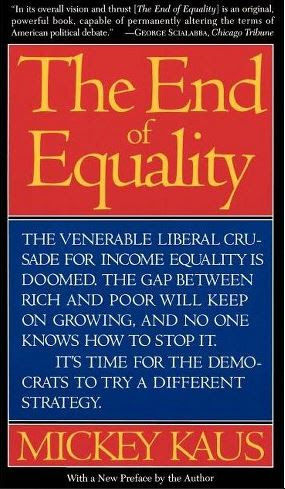
A Random Thought on Mikey Kaus

A few days ago Robert Farley, of Lawyers, Guns & Money, posted the latest entry in his wonderful "Oral History of the Blogosphere" project, this one focusing on the once-notorious (indeed, widely loathed on the liberal/left/progressive side of the blogosphere), but now mostly-just-grumbled-over journalist and blogger, Mickey Kaus. It's actually a pretty great conversation, if you're into remembering or rethinking what people were arguing about online and why and how they did it, circa 20001-2010. For me, besides enjoying it as I have enjoyed every previous entry in this series (really, if you're a blogger or ever thought you could be one you should listen to them all), it made me reflect on the enduring relevance of a particular ideological niche, however tiny or incoherent it may seem.

I never thought, and still don't think, the loathing of Kaus was mostly due to the controversial positions he took on the dominant political news items in America in the 1990s and 2000s: welfare reform, criminal justice, immigration, the Iraq War, etc. Rather, I think he was loathed because he insisted--to the minds of the aforementioned liberal/left/progressive pundit class, infuriatingly so--that he was taking those positions as a sincere, if appropriately evolved, New Deal Democrat. In a way, I think Kaus occupies the same much-condemned rhetorical space as Ralph Nader: he's someone who is seen as a betrayer, someone who talks the talk of liberal justice and then engages in public actions and intervenes in public debates that seem, to most liberals and leftists and progressives, to entirely contrary to how the liberal political world actually works.

The first minutes of the conversation with Kaus touched upon the legacy of Charles Peters and the magazine he founded, Washington Monthly, which tutored legions of journalists (including Kaus) in a vision of activist government grounded, as Paul Glastris, Washington Monthly's long-time editor, put it, in "the communitarian patriotic liberalism of Peters’s New Deal youth." There are, out there amid the sprawling, multifaceted coalition that constitutes the Democratic Party, lines of reflection upon the achievements of the New Deal, both scholarly and activist, which seriously downplay the ethical and civic part of that triumph of positive liberalism and egalitarianism. According to those arguments, the greatest achievement of the New Deal was that it laid the foundation for erecting social democratic institutions in America, for which many are still fighting for: to make health care a human right, to make higher education available to all, to put workers in charge of the economy, etc. As a democratic socialist myself, I agree with those lines of argument! But I'm also a sometime left conservative, a wanna-be civic republican, and a fan of both Christopher Lasch and the Point Huron Statement, and thus find myself agreeing with Peters as well. The leadership of the post-New Deal, and particularly the post-civil rights movement, Democratic Party really did focus mostly on achieving liberal justice through building ever-more effective (and ever-larger) redistributive institutions and practices. The way that focus partly (but not entirely unintentionally) combined a very un-New Dealish individualism with outright bureaucratic statism, and allowed a entirely new kind of meritocracy to flourish in liberal circles, thus taking the focus off the cultural and communal aspects of what a genuinely egalitarian and just society must involve...well, that's the critical space which Kaus occupied. Entirely coherently? In a philosophically rigorous way? Open-mindedly, kindly, and without self-indulgent contrarian snark? Not at all; in many ways, Kaus's voice was a profoundly flawed vehicle for this critical perspective on post-Cold War liberalism in America. But to my mind, at least, he was a vehicle for it all the same.

My primary evidence for this is a wonderful book that he wrote, The End of Equality. The book never got the respect it deserved, I think, partly because of the weird moment it arrived (right at the beginning of the Clinton administration; but was the book arguing against what Clinton was doing, or supporting it, or both?), and partly because Kaus's subsequent career--intransigently defending some of the worst aspects of Clinton's welfare reform, obsessing about family breakdown even as income inequality skyrocketed, etc.--retrospectively made the book's insistence that "Money Liberalism" was a non-starter and that "Civic Liberalism" was the way to go seem like Kaus was auditioning George W. Bush's "compassionate conservatism" a decade before it nominally (though never actually) arrived. All those criticisms are fair. But I still use selections from the book in my Political Ideologies classes on occasion, because I find so much of it refreshingly clear and free of cant. He is frank about his conviction that most of those with socialist aspirations have been unwilling to recognize the incompatibility of "fraternity, community, and idealism" with the lack of "material prosperity" that only rapacious capitalism seems to provide (p. 11); he is genuinely eloquent in asserting that differing levels of health care don't actually matter to the egalitarian legitimacy of society so much as "that everyone wait in the same waiting rooms" (p. 93); and he is downright prescient in warning that, if the goal of the Democratic party continued to be tweaking the tax code in some Rawlsian way so as to make it fairer and increase the size of welfare checks but in the meantime said nothing about the lack of community-feeling and solidarity in America, the end result will a general hardening of whatever egalitarian spirit the revolutions of the 1930s and the 1960s may have left us with:

Americans may be social egalitarians today. But give the affluent two more decades to revile the underclass and avoid the cities as if they were a dangerous foreign country, two decades to isolate their "gifted" children from their supposed inferiors, two decades of "symbolic analysis" and assortative mating, and we might wake up to discover that Americans aren't such egalitarians at all any more. Then politics would be really dispiriting (p. 180).

That paragraph can be picked apart and even partly undermined in multiple ways (that large numbers of younger and mostly liberal-learning people, including young families, started returning to America's cities throughout the 2000s is the most obvious rejoinder, but not the only one). But I read it, and I see the once at least moderately liberal suburbs, filled with college-educated, white-collar-job-holding, mostly well-off Americans, voting for Trump across large parts of America. Dispiriting indeed.

Anyway, this is just something that occurred to me, when Robert unintentionally invited Kaus back into my mind. So I thank him for that.